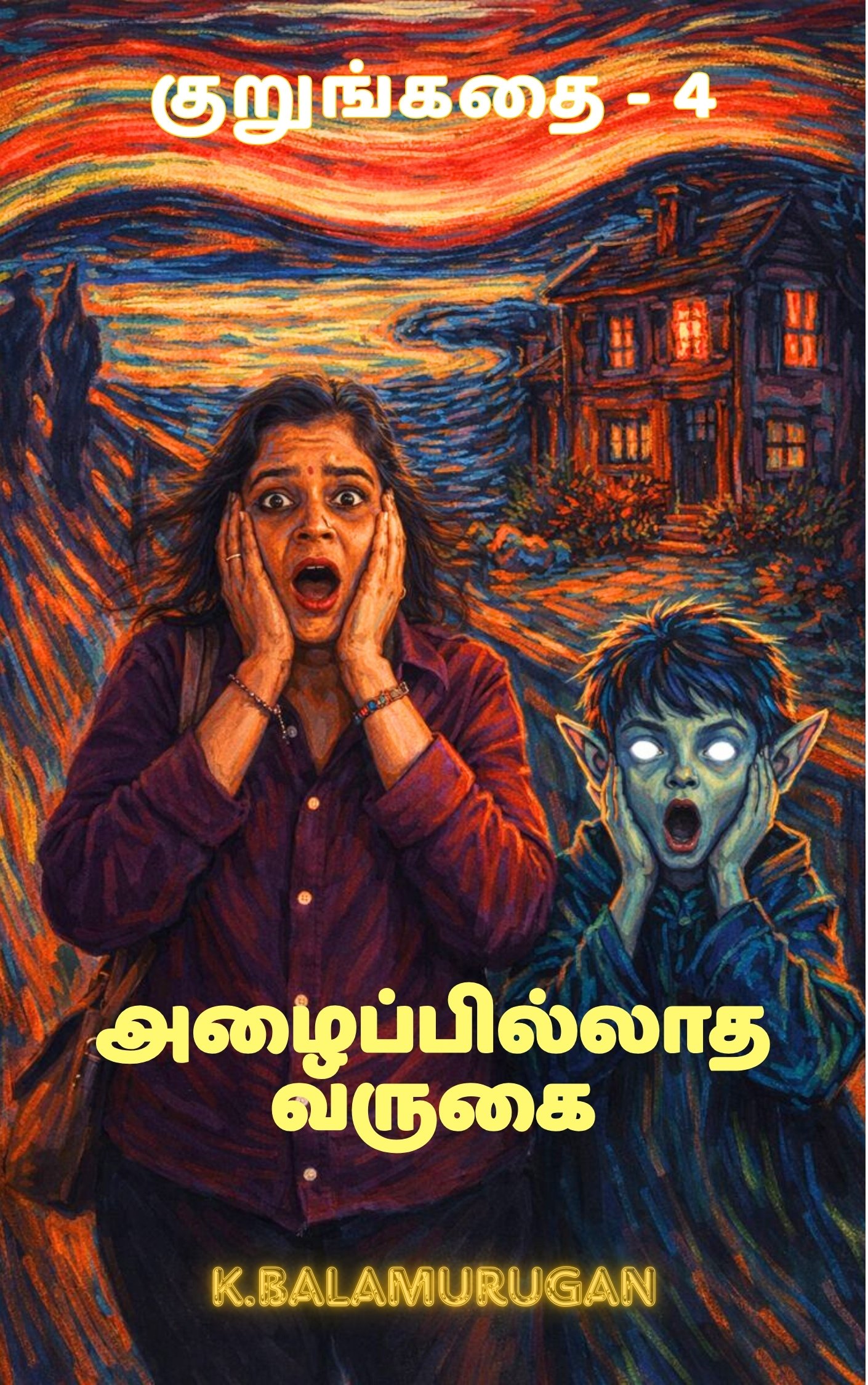
The Ears of the Mother – Short Story By K.Balamurugan
“He told us long ago that this was his final wish… why must you be so stubborn?”
David’s hands rested upon Peter’s shoulders, a grip firm against a frame that refused to yield. Sweat beaded across Peter’s chest. For the past two weeks, he had been caught in a relentless spiral between the hospital and home. The dark circles etched around his eyes bore witness to a profound, soul-weary exhaustion. Peter’s mind was a landscape of unrest.
“Come to me, all you who are weary and burdened, and I will give you rest. Matthew, Chapter 11, Verse 28.”
Peter’s wife, Anthoniyammal, stood beside Mariasusai and read the biblical verse aloud. David waited a moment, honoring the words with silence, before pressing on. “A man from a family that looks after the Mother’s chapel shouldn’t harbor this much arrogance… listen to what I’m saying.”
Mariasusai, Peter’s father, had been laid within the small chapel of the Mother for a brief time. The hospital had declared further treatment futile and sent him home. Peter had rented a private ambulance to bring him back to Tingi Kampong, determined that his father’s soul should depart from the very house where he had lived his life.
When they arrived, Anthoniyammal insisted he be taken straight to the chapel. Peter was seething, but the gathering crowd forced him to swallow his fury and remain silent.
Mariasusai’s gaze flickered between the eyes of the Mother’s statue and the rafters of the chapel. He held back his tears, locking them deep within. Children peered into his glistening eyes before retreating; the eyes of those standing on the threshold of death often take on a magician’s glint, drawing the instinctive curiosity of the living.
“Yes… he spent all these years devoted to the church… but what did he ever do for his own children?” Peter’s voice rose, sparking a ripple of unease through the gathered kin. “Let the Mother come and save him now. I’d like to see that miracle myself. Move aside, will you?”
Only fifteen families in Tingi Kampong took turns maintaining this chapel, but Mariasusai’s family had carried the full weight of responsibility from the very beginning.
“I am saying this in front of the Mother… has anything good ever happened to him?” Peter challenged. “His life must end at home. I am taking him now.” Yet, despite his words, his feet remained rooted to the spot.
For the last five years, Peter had been the sole caregiver for his father. His siblings had moved away to Kuala Lumpur and Johor, preoccupied with their own lives and families. A cold, inextinguishable resentment burned within him because no one had come to help. “We live in the same village… my uncle’s house is just a few steps away. Is he not a brother? Did he come to see him? Everyone abandoned us. So, what then?”
David had no answer. He recognized the raw, personal anguish behind Peter’s questions. David was Peter’s maternal uncle; living in Penang, he only appeared when a family need arose, and as such, his words carried little weight. He often tested his influence only to be met with disappointment; it was only the presence of the chapel that brought him back at all.
“I’m taking him home now. What is there for him here? Is the Mother going to take him into her lap and save him?” Peter’s voice was thick with bitterness, his reddened eyes on the verge of spilling over.
“Be quiet! Do not speak against the Mother. She is the Great Mother,” an elderly man, a contemporary of Mariasusai, rose and stood by the bed. Though frail, he drew himself up with a certain rigidity—a practiced defense against drowning in sorrow.
_______________
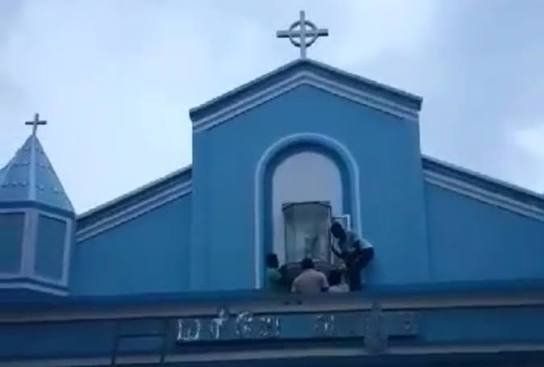
The wooden cross atop the chapel’s tower had long since lost its pristine white, turning a dull yellow with age. Built in 1935 for the people of Kampong Tingi, the chapel had been preserved by the plantation workers for generations. Each week, a different family would take responsibility for cooking and serving food. By the 1970s, Mariasusai had been appointed head of the liturgical committee.
When the government ordered the chapel’s removal in 1981 for a housing project, the community was devastated, having no land and nowhere to take the Mother. It was Mariasusai who stepped forward, offering his own home as a place of worship. From 1981 to 1987, his house became the heart of the community’s prayers. Every Friday, they gathered in the open space to the left of his house where the statue was kept.
“What does it matter where the Mother stands? Her gaze is upon us all,” Mariasusai would say. From the moment the statue entered his home, he viewed himself merely as her servant. He preached to every passerby: “If you are in pain, come to the Mother.”
He labored for her until the day he collapsed. After his stroke, he initially lashed out in anger at those who came to pray and sprinkle holy water. In his slurred, delirious speech, he cursed. He refused to be taken to the chapel, sobbing through the nights that the Mother had abandoned him. Even in the great hospital at Sungai Petani, her name never crossed his lips; he didn’t even ask if the candles had been lit.
But then came a rainy day when a power surge plunged the chapel into darkness. Panic seized him. He badgered Peter to go and check on it. “The Mother will not let go of me… and I will not let go of her,” he began to murmur. Anthoniyammal heard these ramblings daily as he lay paralyzed. His mouth moved rhythmically, his eyes fixed on the Mother’s eyes. Anthoniyammal sensed those eyes were demanding justice. She stroked his head to soothe him. After thirty years of carrying and caring for her, his eyes were now filled with unspoken questions.
The Mother stood clearly in her white robes and blue mantle. A garland from the morning adorned her neck, and jars of cut flowers sat at her feet. Below the grotto where she stood were two steps with stands for candles. Most had melted away, leaving behind mounds of hardened wax. The grotto itself was crafted from small rocks and cement, making it appear as though the Mother stood among the stones of a waterfall.
“Shall we take him home now?” Anthoniyammal asked. She felt Mariasusai’s eyes, still fixed on the Mother, were trying to tell her something. Her own frantic need to bring him before the Mother one last time had finally subsided.
“Let’s go… how much longer can we stay? It’s not like he’s going to sit up and light a candle for her now,” Peter snapped, projecting his discomfort to the crowd. Everyone in Tingi Kampong knew Peter’s volatile nature. As the relatives remained silent, Anthoniyammal pulled up a chair at the head of Mariasusai’s bed and sat down.
_______________
Inside the chapel, in front of the rows of wooden pews, was a ledge for kneeling. David went there, clasped his hands over the wood, and closed his eyes, trying to release the tension within him.
“Son, if something happens to me, what will you do? Bury me in the Tingi cemetery… I’m afraid… is there no way to avoid death?” This had been Mariasusai’s plea to Peter in the hospital before he lost his speech. His eyes held that same desperate supplication now as he looked at the Mother. Peter had tried everything to ease his father’s fear of death, but he could never bring him peace.
“Mariasusai… you’re so obsessed with the Mother that you can’t even see your own siblings. I’ll never step foot in this church or near your house again!” His brother, Gnana Prakasam, had screamed those words in front of the chapel years ago. True to his word, he never returned. Many friends had vanished the same way.
“He won’t even come to the village for a funeral or a wedding… how can we remain family?” Peter paced outside the chapel, torn between grief and anger. In the cooking area by the entrance, discarded flowers lay in a heap. Just yesterday, the funeral mass for William had been held there.
As outsiders began arriving at the chapel to see Mariasusai, Anthoniyammal covered her head with the end of her sari. Some who had moved from Tingi to Sungai Petani returned to pay their respects. They all stared into Mariasusai’s eyes—eyes that many would never forget.
When a child fell ill or cried through the night with fever, people used to bring them to Mariasusai’s house, even at midnight. He would trace the sign of the cross on the child’s forehead and pray. In the last five years, Peter hadn’t been able to maintain these traditions; he would send Anthoniyammal instead.
“Nothing will happen, child. Look at the cross atop the chapel and pray. The Mother will walk with you. If the child recovers, come on Friday and light a candle… what else does she need? An offering of the heart is enough.” People believed his words carried grace and blessings. Whenever he could, Mariasusai would light a candle for the Mother and sit with her. As his friends began to pass away, the time he spent by those flickering candles only grew.
“When the Mother is here, why worry? She will take care,” Mariasusai would tell himself most of all. Within the village, people began to refer to him as the parish priest or ‘Father.’ When he first heard this, it pained him deeply. “That requires a certain worthiness! Don’t call me a priest just because I look after the Mother… it’s a great sin. The Lord will not allow it. I only ask the Mother for a healthy body… what else do I need?”
He would vent these worries to Peter and Anthoniyammal throughout the night. He would sit by the door, legs swollen from drinking too much water, waiting for the grace from the chapel to heal him until he drifted into sleep. “If Mariasusai prays toward the chapel, the Mother will come to him, no matter where she is,” was a common testament in the village. Despite his protests, the people believed he possessed a special power to bring their sorrows to her.
Once a year, on December 8th, the chapel celebrated its festival. Tents were pitched, and under the leadership of the Sungai Petani parish priest, Father Samuel, the festivities would begin. The crowds were immense; men and women sat even outside the chapel to participate in the mass, waiting eagerly for the Eucharist.
People would share testimonies of miracles. Many still remembered Jenny from Kuala Lumpur, who said, “When we come here, Mariasusai tells us to sit, pray, and light a candle. He says just as the wax melts, our troubles will melt away. That brings such comfort. Hallelujah!” She had fainted right after speaking, a moment that cemented the reputation of both Mariasusai and the Mother of Tingi Kampong.
There was another time when a middle-aged woman and a young girl arrived while Mariasusai was cleaning. They knelt before the grotto and began to sob. The girl’s crying was so pure it moved Mariasusai to tears. He stood by silently until they were done. “If we surrender our hearts before the Mother, she will plead for us before the Lord. I don’t know your troubles, but she is merciful. Everything will be fine.” His words were an embrace. He gave them holy water, prayed, and sent them on their way. Even the high priest marveled at the love and respect the people held for him.
_______________
“Can I take him now? Or must everything end here? His last breath must be in our house!” Peter’s shouting returned to the chapel. When met with silence, he too fell quiet. Deep down, he seemed to be waiting for someone to stop him, to buy just a little more time.
“Where will Grandpa Mariasusai’s soul go?” the children whispered among themselves.
Mariasusai’s breathing grew labored and heavy. His eyes darted between the Mother and Anthoniyammal, desperately trying to signal toward the chapel doors. Anthoniyammal brushed away the flies hovering near his forehead. Peter remembered the doctor’s grim warning: it was doubtful he would survive the night. One could hear the final struggle for life in the rising and falling rhythm of his breath.
“Peter… your father stood on these steps and prayed for so many. He went to so many houses to offer prayers. He is the one who gave his own land to save the Mother!” An elderly woman entered the chapel, weeping. Her sobs echoed past the ears of the Mother and out into the air.
“How much longer? I said his life should end at home. I don’t want it to happen here. Our family has given enough service to this church,” Peter remained stubborn at the entrance. The onlookers stood paralyzed.
Suddenly, Peter’s aunt, Santhanamary, rushed in, wailing. She had moved to Butterworth with her son the previous year. She had served the liturgical committee for years alongside Mariasusai, but after moving, she had turned away from the Mother to join a different sect. Mariasusai had begged her not to leave.
“Brother, no matter what you say, the Bible is the final word of the Lord. The Mother was just a human, a vessel used to bring the Lord into the world. We mustn’t go against the Bible,” she had told him at his doorstep.
“Mary, the mercy is great when we go to the Lord through his Mother. She is blessed. Don’t you remember the miracles? When your son was lying injured on the road and you ran to the Mother before the ambulance even arrived? Have you forgotten?”
But she had left anyway, refusing to come to the chapel. For a time, Mariasusai felt like a man who had lost a limb, sitting alone in the chapel and thinking of the roses Mary used to place in the grotto. “How can you go to Jesus if you do not respect his Mother?” Even when people argued with him, he would simply retreat to the chapel and pour out his grief to the statue.
It was in 1987, when the need for a permanent chapel became urgent, that Mariasusai donated an acre of his own land. The Chapel of the Immaculate Conception was built there, despite the criticism of his relatives.
“Brother, the Mother has let go of you… I told you so… if you had looked after your own body instead of lying in this church, would it have come to this?” Santhanamary beat her chest and cried. Hearing her voice, Mariasusai’s eyes moved slightly, again trying to point toward the chapel doors. She held his face and pressed her forehead against his.
Father Samuel arrived on his motorcycle. He held a deep affection for Mariasusai and would always visit him on the first Saturday of the month. He donned his robes and began to pray from the pulpit before coming down to anoint Mariasusai’s forehead and hands with holy oil.
“Through this holy anointing, may the Lord in his love and mercy help you with the grace of the Holy Spirit…”
“Amen,” the crowd responded. The priest’s voice trembled—a rare loss of composure for a man usually so steady. Mariasusai’s eyes never wavered from the Mother.
“Mary… pray to the Lord to heal your son,” Anthoniyammal whispered to herself.
Mariasusai’s breathing became even more strained, his mouth gasping for air. The ears of the Mother heard it all.
“Father, we are taking him home. At least you tell them,” Peter shouted, his voice heightening the tension in the room. A large crowd from the village had gathered, watching as Peter waited for the priest’s response. Father Samuel could see that Mariasusai was in his final moments.
He remembered how Mariasusai hated praise, how he had wept before the Mother, apologizing for those who called him ‘Father.’ “Mother, who am I? Did I save you? No, you found me and gave me salvation. I am but a tool… it hurts when they call me ‘Guru,’” he had sobbed.
He had once shared a dream with the chapel-goers that changed his life. He was lying on the steps of the pulpit when he felt a sudden warmth. Someone gathered him up and held him in their lap. It was the Mother, her face radiant with light. As he wept, she comforted him: “Mariasusai, all that reaches your ears is as if it has reached mine.” From that day on, he never failed to light a candle for anyone who came to him with a plea.
As dusk began to fall, Peter remained firm. His father was still struggling for breath. The priest looked at Mariasusai’s eyes; they were flicking between the Mother and the door in desperation.
“Anthoniyammal, go home and open the doors… this is all because of you! Lift the bed!” Peter ordered the young men standing outside. He called his friends to help carry his father out. Even then, his mind raced, wondering if anyone would dare to stop him.
“Peter… why do you do this against your father’s final wish?” Santhanamary asked, her heart softening. Some watched with bated breath, wondering if he would pass away right there in the Mother’s presence before Peter could move him.
“I know best… his life should end in the house where he suffered. Only his bed and his room know how much pain he was in. What does the Mother know?” No one could look into Peter’s furious eyes. He spat out the word ‘Mother’ as he looked at the grotto.
The Mother’s eyes remained serene, showing no sign of the turmoil. In a fit of rage, Peter and his friends lifted the bed and began to carry Mariasusai out. The crowd watched in sorrow as Mariasusai was removed from the chapel.
Only then did Mariasusai’s eyes begin to find peace.
They carried him toward his house, some fifty meters away. The bed felt heavy in their hands. The path was damp and muddy from the morning rain. Halfway between the chapel and the house, there was a sound—a great, sudden gasp like a deep sigh. Mariasusai’s final breath rose, then vanished into the air.
And the Mother’s ears, perhaps, were listening to that sound too.
— K. Balamurugan